Currently Empty: $0.00

Common Stone Crusher Problems and How to Prevent Them
A stone crusher is one of the hardest-working machines on any site. It faces constant impact, abrasion, and heavy loads that would wear down almost any equipment over time. That relentless duty is exactly why small problems can grow into costly breakdowns if you ignore them. The good news is that most crusher failures follow predictable patterns, and nearly all of them can be prevented with steady inspection and smart operating habits. When you understand what typically goes wrong and why, you protect your investment, keep production flowing, and avoid the surprise downtime that eats into profits. This guide walks through the most common stone crusher problems and gives you practical ways to stay ahead of each one.
Jaw Crusher Wear and Tooth Damage
The jaws and teeth of a crusher take the full force of every rock that passes through the chamber. When you process hard or highly abrasive material, those surfaces slowly grind down, and their shape changes over time. Worn jaw plates lose their bite, which reduces crushing efficiency and produces uneven product sizing. Damaged teeth can also let material slip through without being fully crushed, forcing you to run more passes and burn extra fuel to hit the same output.
Wear is unavoidable, but sudden damage often is not. Feeding tramp metal, uncrushable debris, or oversized rock into the chamber can chip or crack the jaw plates well before their normal service life ends. This is why what goes into the crusher matters as much as the machine itself.
A few simple habits keep jaw wear under control:
- Inspect the jaw plates and teeth regularly for uneven wear, cracks, or flattened profiles
- Rotate or flip reversible jaw plates when the design allows, spreading wear evenly
- Remove tramp metal and uncrushable material before it reaches the chamber
- Replace worn plates on schedule rather than running them to failure
Timely replacement is the key to consistent performance. Running worn jaws too long puts extra strain on the drive system, the bearings, and the frame, turning a routine parts swap into a much larger repair. Keeping spare wear parts on hand means you can act the moment inspection reveals a problem, so production barely pauses. When you treat jaw and tooth condition as a routine checkpoint, you hold crushing quality steady and extend the life of the machine as a whole.
Hydraulic System Leaks and Pressure Loss
The hydraulic system controls many of the crusher’s most important functions, from adjusting the closed side setting to clearing the chamber and driving movement. When that system loses pressure or springs a leak, performance drops fast. You may notice sluggish adjustments, weaker crushing force, or functions that fail to respond the way they should. Left unaddressed, a small hydraulic issue can escalate into a full stoppage in the middle of a shift.
Most hydraulic trouble starts in predictable places. Hoses flex and rub against surrounding components, fittings loosen from constant vibration, and seals harden with age and heat. Any of these can allow fluid to escape, which lowers system pressure and introduces air or contamination into the lines. Low fluid levels then make the problem worse, since the pump cannot maintain steady pressure without enough oil to move.
Regular attention prevents the vast majority of these failures. Build a simple routine that covers the core points of the system, checking hoses and fittings for wetness, cracks, or chafing, confirming the fluid level and condition, and verifying that operating pressure sits within the manufacturer’s specified range. Contaminated or overheated fluid loses its ability to transfer force cleanly, so replacing filters and fluid on schedule protects the whole circuit.
Catching a weeping fitting or a worn hose early costs a fraction of what a blown line and lost production would. It also protects the pump and valves, which are far more expensive to replace than a hose or seal. When you keep the hydraulic system clean, sealed, and correctly pressurized, the crusher responds crisply and stays reliable through demanding, high-volume work.
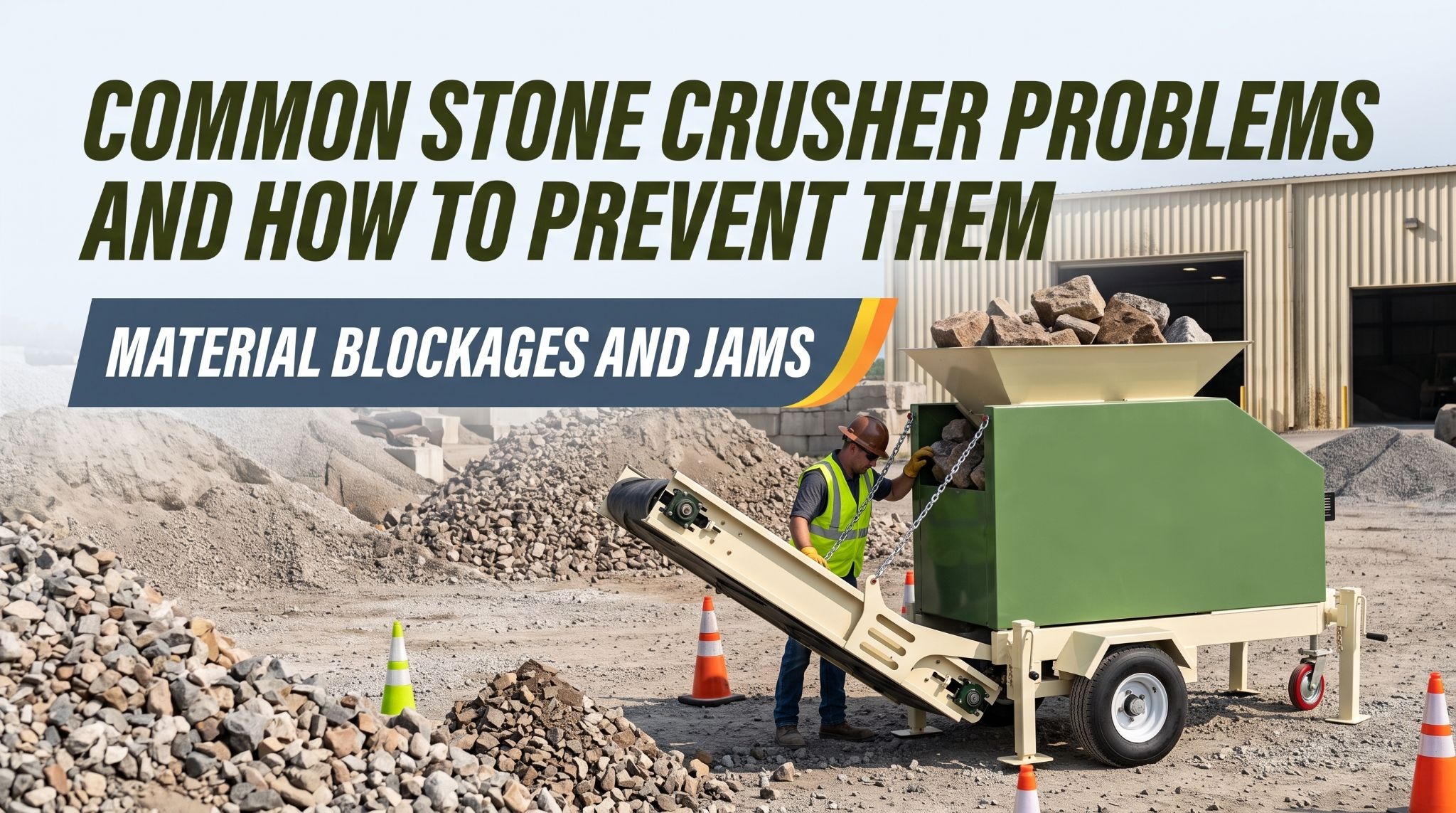
Material Blockages and Jams
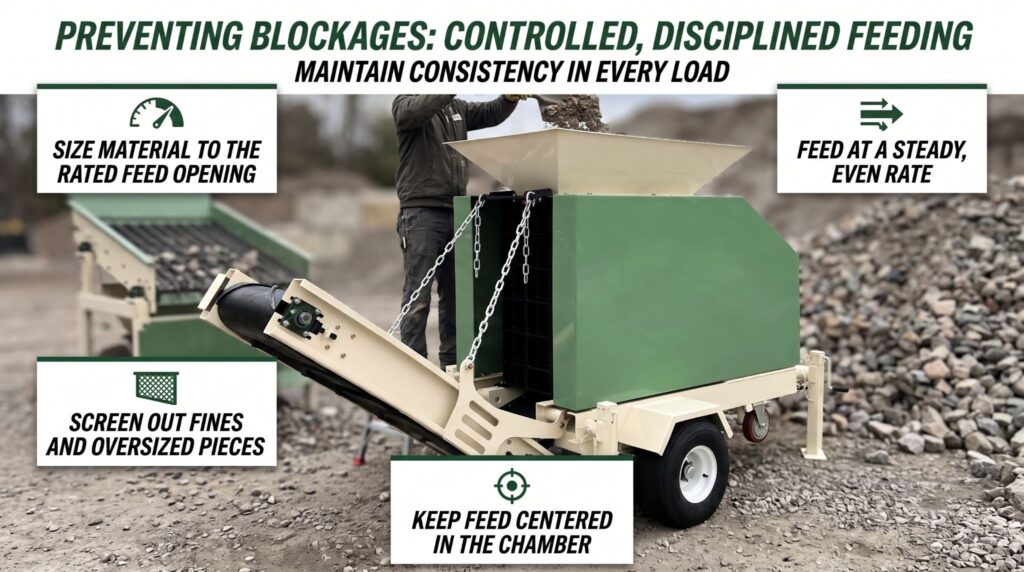
Few things halt production faster than a jammed crushing chamber. Blockages usually happen when oversized rock enters the machine or when material is fed too quickly for the crusher to process. Once a jam forms, the whole operation stops while your crew clears the obstruction, and that lost time adds up quickly across a busy day. Worse, forcing material through a partial blockage can overload the drive system and damage internal components.
Most jams trace back to how material enters the machine. Rock that exceeds the crusher’s rated feed size simply cannot pass through the chamber cleanly. Uneven or surging feed, where large volumes hit the crusher all at once, overwhelms its capacity and packs the chamber tighter than it can handle. Wet, sticky, or fine material can also cling together and choke the opening.
You can prevent most blockages with controlled, disciplined feeding:
- Size incoming material so it stays within the crusher’s rated feed opening
- Feed at a steady, even rate rather than dumping large loads at once
- Use a grizzly or screen ahead of the crusher to remove fines and oversized pieces
- Keep the feed centered in the chamber so material distributes evenly
Consistent feeding does more than prevent jams. It also improves product quality and protects the machine from the shock loads that come with irregular input. When the crusher receives a smooth, properly sized stream of material, it runs at its designed capacity and the chamber stays clear. Training operators to watch the feed and respond to early signs of buildup keeps small slowdowns from turning into full stoppages, so the crushing process stays productive and predictable.
Engine Overheating and Cooling Issues
Crushing is heavy, continuous work, and it places a sustained load on the engine and cooling system. Unlike stop-and-start tasks, a crusher often runs at high demand for hours at a time. That constant effort generates significant heat, and if the cooling system cannot keep up, temperatures climb toward the danger zone. An overheating engine may lose power, trigger protective shutdowns, or suffer serious internal damage that leads to expensive repairs.
Dust is the crusher’s biggest enemy when it comes to cooling. Crushing stone throws fine particles into the air, and those particles settle on radiators, cooling fins, and air intakes. Over time, this buildup blocks airflow and insulates the very surfaces that are supposed to shed heat. A radiator caked with dust simply cannot cool the engine the way it was designed to, even if every other component is in good shape.
Keeping the cooling system clean is the single most effective defense. Clear dust and debris from radiators and cooling fins regularly, and check that airflow paths remain open and unobstructed. Confirm that coolant levels and mixture are correct, and inspect the fan, belts, and hoses for wear that could reduce cooling performance. In hot climates or dusty pits, these checks deserve even more frequent attention.
It also helps to give the engine sensible operating conditions. Avoid overloading the crusher beyond its rated capacity, since sustained overload forces the engine to work harder and run hotter. Monitor temperature gauges throughout the shift so you catch a rising trend before it becomes a shutdown. When you keep cooling components clean and airflow clear, the engine holds a stable operating temperature and delivers dependable power through long, demanding runs.
Conveyor and Belt Wear
Conveyors move crushed material away from the machine and keep the entire operation flowing, so their condition has a direct effect on productivity. During regular use, belts wear, rollers loosen, and tension drifts out of adjustment. Any of these issues can slow production, spill material, or lead to a belt failure that shuts the line down. Because conveyors run almost constantly, even minor problems tend to accelerate if they go unnoticed.
Belt wear shows up as fraying edges, surface cracking, or thinning in the areas that carry the heaviest load. Misalignment is another frequent culprit, causing the belt to track to one side, rub against the frame, and wear unevenly. Improper tension creates its own set of problems, since a loose belt slips and a belt that is too tight strains the rollers and bearings.
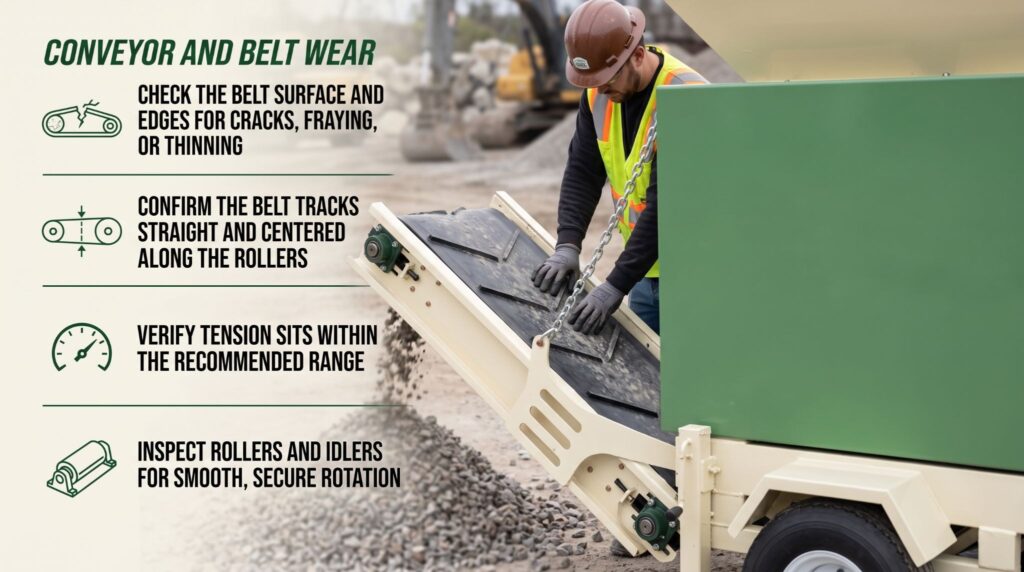
Routine inspection catches these issues while they are still easy to fix:
- Check the belt surface and edges for cracks, fraying, or thinning
- Confirm the belt tracks straight and centered along the rollers
- Verify tension sits within the recommended range, neither slipping nor overstrained
- Inspect rollers and idlers for smooth rotation and secure mounting
Material spillage is often the first visible warning sign. When you see product piling up beneath the conveyor, it usually points to misalignment, worn belts, or damaged skirting. Addressing the cause quickly prevents both wasted material and the housekeeping burden of cleaning it up. Keeping the belt properly aligned and tensioned also extends the life of the rollers and bearings, which reduces overall maintenance cost. With steady checks and prompt adjustments, your conveyor keeps material moving cleanly and supports uninterrupted crushing throughout the day.
Conclusion
Stone crushers face some of the toughest working conditions of any equipment, but the problems they encounter are rarely mysterious. Jaw and tooth wear, hydraulic leaks, chamber blockages, engine overheating, and conveyor issues all follow patterns you can anticipate and prevent. The common thread running through every one of them is consistent attention. Regular inspection, disciplined feeding, clean cooling components, and prompt parts replacement do far more to protect uptime than any single repair ever could.
The most reliable operations treat maintenance as a daily habit rather than a reaction to breakdowns. Build simple inspection routines into every shift, keep essential wear parts and fluids on hand, and train your crew to recognize early warning signs before they turn into failures. When you stay ahead of these common issues, your crusher rewards you with steady output, lower repair costs, and dependable performance job after job. A little prevention today keeps your production moving tomorrow.
Frequently Asked Questions
1. How often should I inspect the jaw plates and teeth on my crusher?
Inspect the jaws and teeth as part of your regular maintenance routine, ideally at the start of each shift with a quick visual check and a more thorough inspection on a set schedule. The right interval depends on how abrasive your material is and how many hours the machine runs. Hard, abrasive rock wears plates faster, so those operations need more frequent checks. Watch for uneven wear, cracks, and flattened profiles, and replace worn plates before they compromise crushing quality or strain other components.
2. What are the first signs of a hydraulic problem?
Early warning signs include sluggish or delayed adjustments, weaker crushing force, and functions that do not respond as crisply as usual. You may also spot visible fluid leaks, wet fittings, or dropping fluid levels. Unusual noises from the pump can point to air or low fluid in the system. Catching these signs early and checking hoses, fittings, fluid, and operating pressure lets you fix a minor issue before it becomes a costly failure or unexpected shutdown.
3. How can I stop material from jamming the crushing chamber?
Focus on what enters the machine. Size incoming material so it stays within the crusher’s rated feed opening, and feed at a steady, even rate instead of dumping large loads all at once. A grizzly or screen ahead of the crusher helps remove oversized pieces and fines that can cause blockages. Keeping the feed centered in the chamber also promotes even distribution. Controlled, disciplined feeding is the most effective way to keep the chamber clear and production flowing.
4. Why does my crusher engine keep overheating?
The most common cause is dust buildup on radiators, cooling fins, and air intakes, which blocks the airflow the engine needs to shed heat. Crushing stone generates fine particles that settle quickly on these surfaces. Low coolant levels, worn belts, or a failing fan can also reduce cooling performance. Overloading the crusher beyond its rated capacity makes the engine run hotter as well. Keeping cooling components clean, maintaining correct coolant levels, and avoiding overload usually solves the problem.
5. How do I know when a conveyor belt needs attention?
Look for fraying edges, surface cracks, or thinning along the belt, as well as any tendency for the belt to track to one side. Material spilling beneath the conveyor is often the clearest early warning, usually pointing to misalignment, worn belts, or tension problems. Check the belt, rollers, and tension during routine inspections, and address any drift or wear promptly. Correcting these issues early prevents belt failure, reduces material waste, and protects the rollers and bearings from added strain.